
Postwar Television
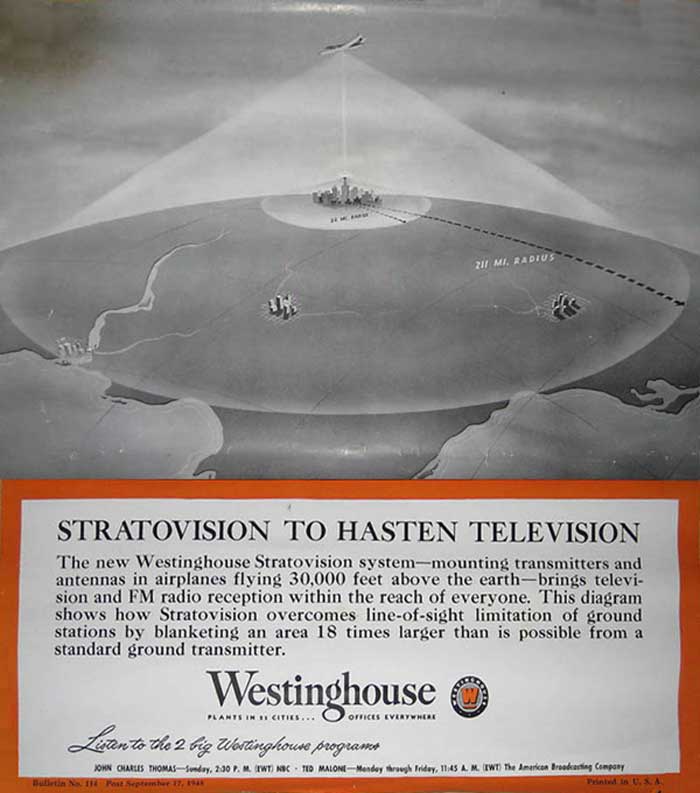
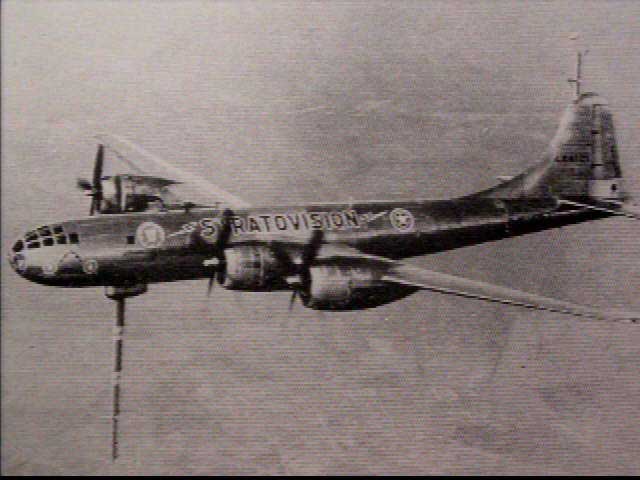
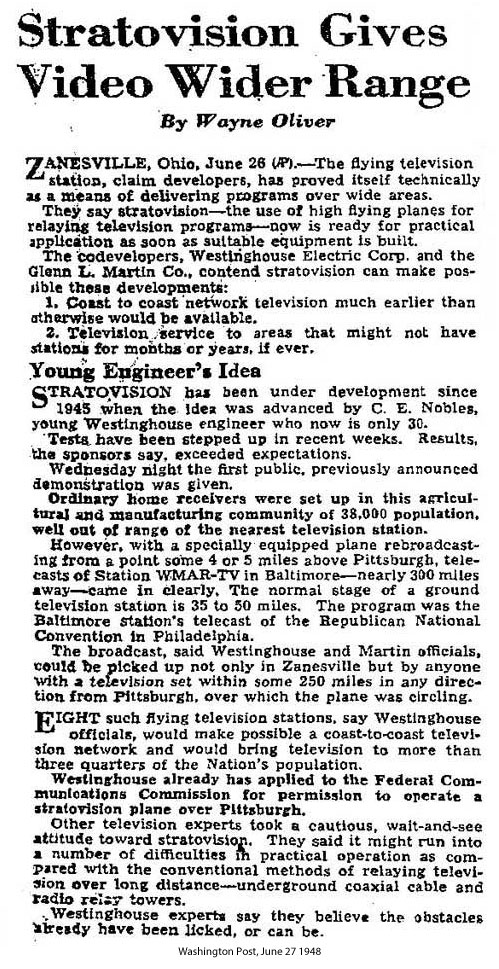
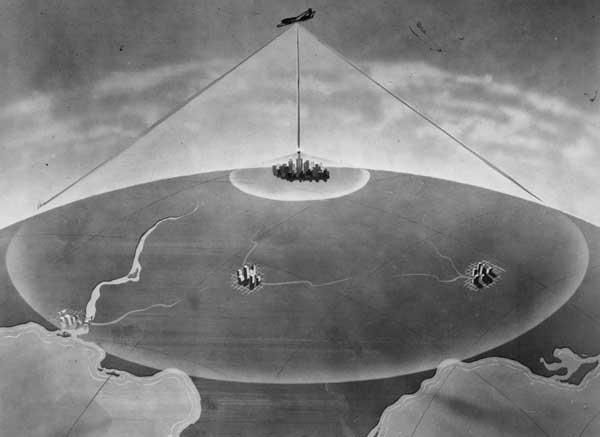
StratovisionStratovision was a system to rebroadcast TV and FM radio signals via transmitters mounted on airplanes. Westinghouse radar engineer Charles E. Nobles invented the technology to bring media to "small town and farm homes" that he believed terrestrial transmitters atop city buildings couldn't reach. The idea was first proposed in 1944, and by September 1946 engineers had a workable design. An airplane flying at 30,000 feet would relay signals originated on the ground. A fleet of fourteen planes, if deployed properly, could bring television to 78 percent of the country's population, including many in isolated rural homes. The Glenn L. Martin Company offered a B-29 Superfortress with a pressurized cabin for testing. On June 23, 1948, the B-29, orbiting 25,000 feet above Pittsburgh, rebroadcast the Republican convention directly from WMAR-TV in Baltimore, 9 to 10 p.m. EDT. The bomber was outfitted with an eight-foot mast on its vertical stabilizer to receive programs; the signal was sent from the antenna to the cabin, and on to the broadcast antenna. The antenna, stored horizontally in the bomb bay, projected 28 feet down when operating. In 1949, AT&T set up a coaxial cable network to connect the East Coast with the Midwest, largely through underground wiring. This network, along with the rapid spread of conventional TV stations across the country, made Stratovision obsolete. Westinghouse dropped Stratovision in 1950.
1945 Westinghouse poster
Photo courtesy of Steve Dichter
The idea of airborne television transmitters didn't die with Stratovision, however. In 1959, MPATI (Midwest Program on Airborne Television Instruction) was launched. Using two DC-6 planes, educational television was broadcast to the midwest.
|