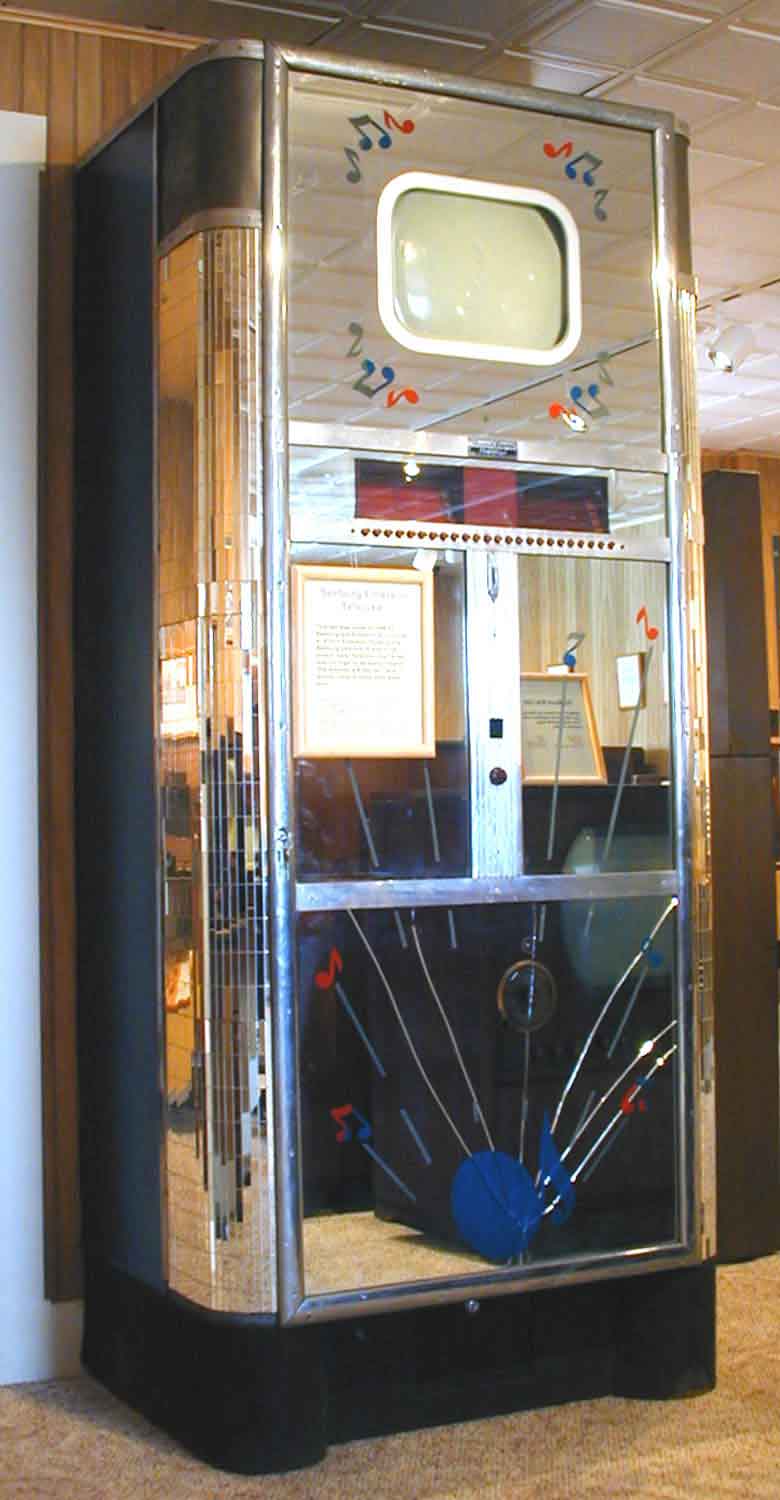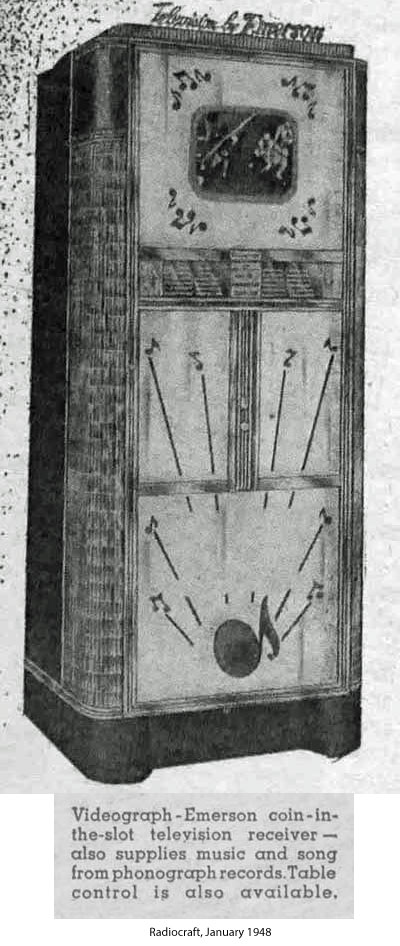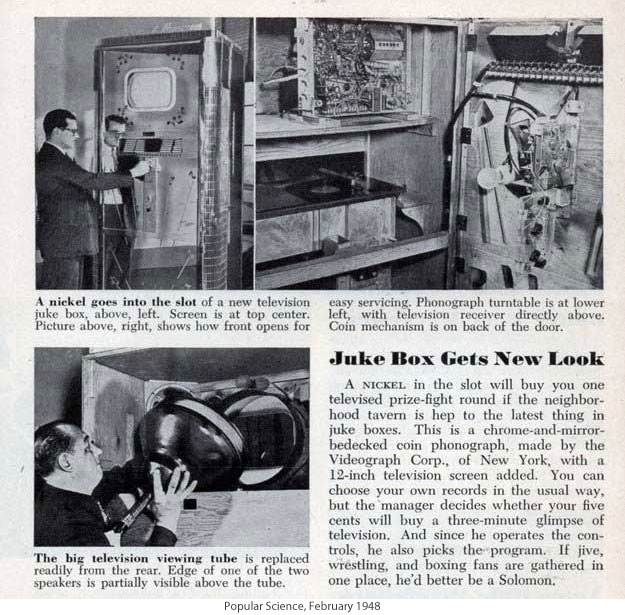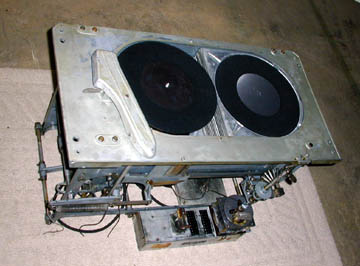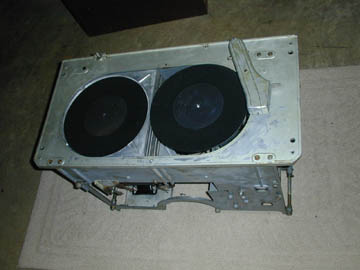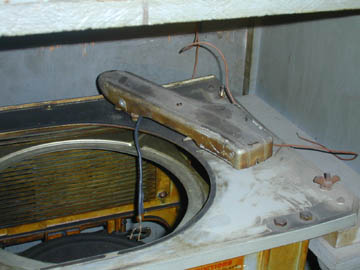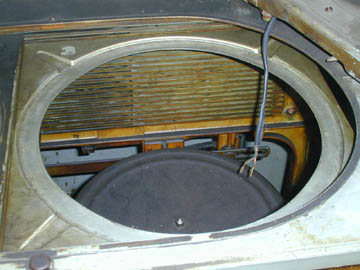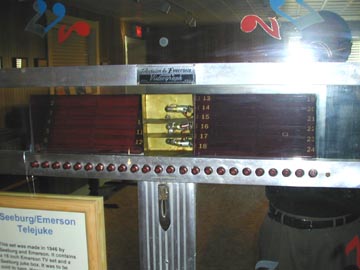

Postwar Television Videograph Television Jukebox (click on picture for high resolution image) (1947 - 15 inch) This set was made in 1947. It contains a 15 inch Emerson TV set and a Seeburg juke box. It was to be sold to bars. According to the person from whom it was purchased, it was made in New York City, and only a few were sold. The TV set is a Emerson model 545, and has channel 1-13. The jukebox can play 20 78 rpm phonograph records (only one side). Here is more historical information on Videograph. We have restored the Videograph to working condition. Starting around 1940s, several companies made after market mirror cabinets for Seeburg mechanisms. The Philbin company made the "Miroccle Music" cabinet. Another company was Audio Specialties Co. Scotto Cabinets of Sacramento, California, made a cabinet called the "Music Master" from 1944 to 1948 that looked very similar to the Videograph. This cabinet was 43 inches wide by 22 inches deep by 72 inches high. The Videograph is quite a bit higher, but looks similar (information courtesy of Cliff Wiener). One possible reason why so few of these were sold is that television stations at the time were fearful of pay per view. When they signed off the air early in the morning, a message was broadcast saying that the programming was for home use only, and that any use where there was a charge for viewing was prohibited. Perhaps the New York stations prevented these units from being sold or used. The changer is a Freborg mechanism, which was used in Seeburg jukeboxes number 146, 147, and 148, as well as all Seeburgs that preceded it starting in 1936. It started out with 12 records and then in 1937 increased to 20. In 1948 a completely new type of mechanism was introduced that held 50 records and played both sides. The amplifier is a model 825-10, used in the Seeburg model 8800, which was called the Seeburg Hitone Symphonola Super and was made in 1941. Apparently they had some amplifiers sitting around after the war they wanted to use up. (Above information courtesy of Bruce Mercer)
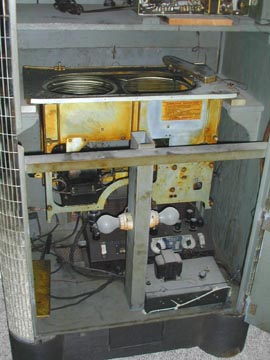
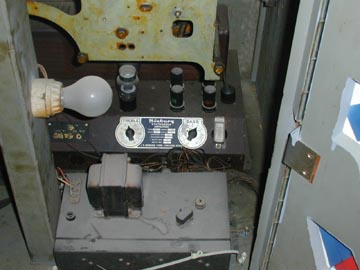
The Juke Box Assembly. The bottom of the TV chassis is visible at the top.
|
|||||||||||