
|
W. E. ANTONY
- Television
Experience
During 1928 and 1929 I
built the transmitter and
assisted Paul Carriger and a Mr. Freeman in the installation of the
first television station ever installed
in the South. This station used
mechanical disk scanning and was operated from Castle Hill
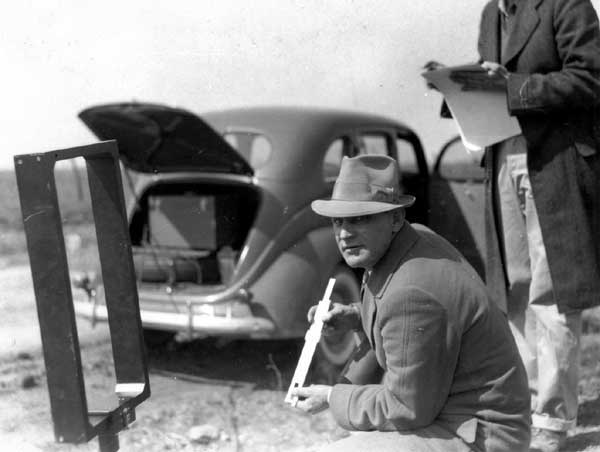
east of Shreveport, Louisiana. Pictures
were received in
Shreveport and at Kennonwood, 18 miles north of Shreveport, where extensive experiments were carried out on receivers.
In June 1938, I was present and received
instructions and briefing on one of the very first Iconoscope
cameras in New York City. The cameras were set up in one
of the RCA laboratories and the demonstrations were under the
direction of Mr. "Stu" Seeley, who had at that time developed the
bias light to correct the output curve of the Iconoscope tube.
In May 1948, under my supervision, Radio
Station KWKH filed application with the Federal Communications
Commission for a television station on channel 8 to be operated in
Shreveport. Prior to, and after this filing, intensive studies were
made and all technical data was supplied to Mr. A. Earl Cullum,
Jr., whose firm prepared and filed the engineering exhibit attached
to the application.
A thorough and complete study of all phases
of television studio and transmitter installation, operation and
maintenance was necessarily carried out in connection with the
preparation of the application. These studies have been carried on
during the past five years to keep abreast of developments. I have
thoroughly studied all technical data supplied by RCA, General
Electric and DuMont as well as other manufacturers and independent
sources and publications. The studies have covered all available
types of equipment, antennas, towers, transmitters, studio
equipment, test apparatus, studio lighting, film and slide
projection, film camera recording and special effects apparatus.
I have attended four NARTB Engineering
conferences, two in Los Angeles and two in Chicago. All phases of
television engineering was covered in the papers delivered and all
the latest TV equipment was shown. A study was made of all
equipment shown and all engineering conferences were attended and
all printed material available was collected for future reference.
In 1949, experiments were conducted and
research was carried out in connection with Tropospheric
propagation of TV signals from WBAP-TV, Ft. Worth, Texas. These
experiments were carried out at KWKH In Shreveport which is well
beyond the theoretical fringe area. During 1949, I invented and
developed a high gain broad band TV receiving antenna known as the
TELESINE. On March 13, 1950 I filed for a patent on this antenna
and the patent office number is SW 149353. In developing this
antenna pictures were received from WBAP-TV, channel 5 at a
distance of 200 miles. Similar reception was also had from Channel
8, Dallas, Texas. The reception of TV signals beyond the fringe
areas caused the FCC to freeze the further action in granting TV
stations throughout the country until the then existing allocation
of channels could be reevaluated in the terms of practical
propagation results. As an outgrowth of these discoveries, Mr. A.
Earl Cullum, Jr., member of the Ad Hoc committee, asked Radio
Station KWKH to commence the recording of tropospheric propagation
of channels 4 and 8 signals from Dallas, Texas. In April 1951, two
REL special receivers, types 726 and 727 were purchased by Radio
Station KWKH along with two Esterline Angus 1 milliampere
recorders. This equipment was installed and operated under my
direction and has been in continuous operation since 1951. Data
obtained from these recorders are forwarded to Mr. A. Earl Cullum,
Jr. whose firm carries out an analysis of the measurements. The
results of the analyses have been made available to the Federal
Communications Commission and all others making studies relating to
TV propagation.
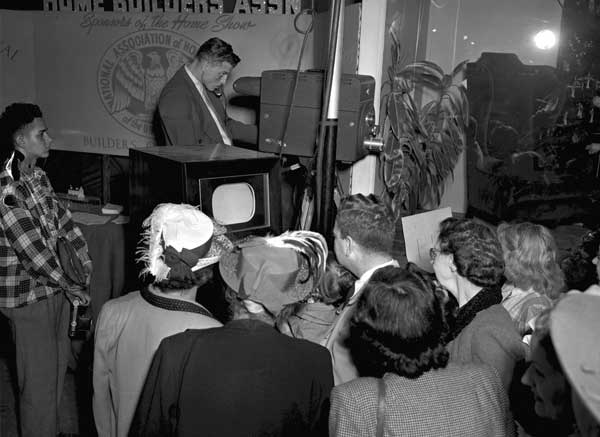
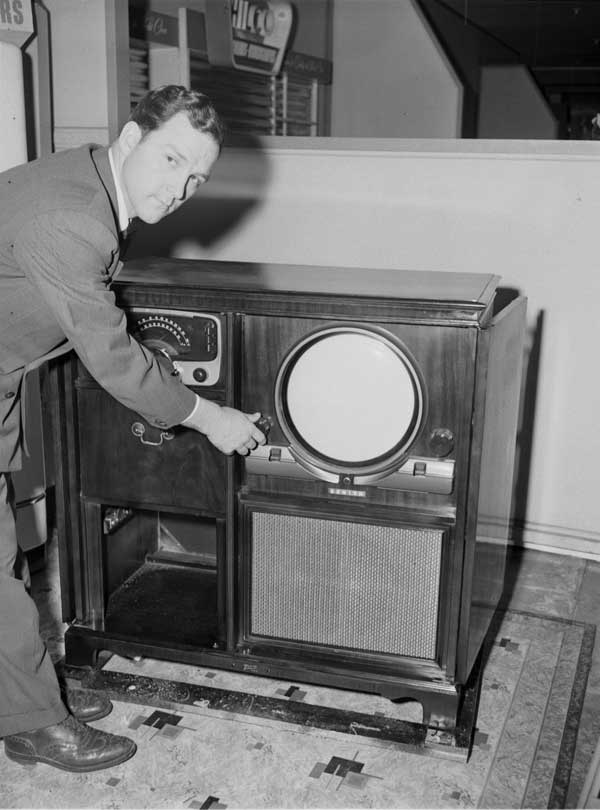
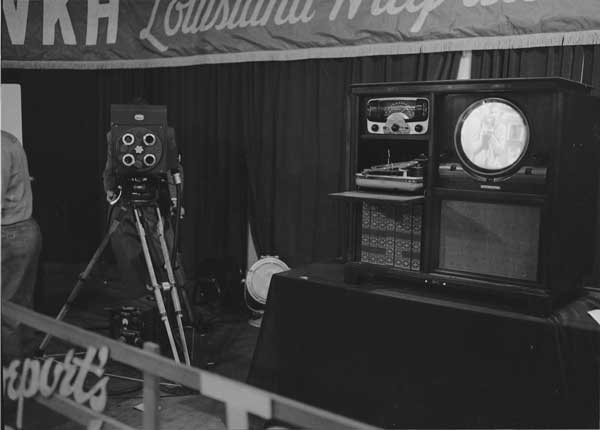
In 1949, through the efforts of the
management of KWKH, a DuMont Telecruiser was brought to Shreveport
and placed on exhibit at the "Home Show. This Telecruiser was
completely equipped with two camera chains and all equipment
necessary for a television closed circuit supplying video and audio
to 30 - 40 television receivers. TV sets were installed and
adjusted throughout the "Home Show” and continuous demonstrations
were carried on with live video pickups. This equipment was
operated by Mr. Lou Pett and Mr. Meyers of DuMont. I assisted in
the planning and setting up of this operation, which required
considerable knowledge of TV receivers, distribution amplifiers,
etc.
In May, 1953, a complete course in overall
television technical installation, operation and maintenance was
had at WMPC, Memphis, Tenn. This technical course was given by and
under the supervision of Mr. E. C. Frase, technical Director for
WMCT. Mr. Trace was assisted in the course of instruction by Mr.
Nelson Alquist and Mr. "Buddy" Frase, WMCT studio supervisor and
crew chief respectively. This instruction covered all phases of a
complete TV station operation from a technical standpoint, such as,
microwave remote pickup, microwave studio-transmitter link
circuits, studio film projection, studio cameras, sync generators,
Telephone Company terminal equipment, studio lighting, film
processing with a Houston
film processor, film editing, cutting, splicing and storage,
production of shows by use of film cameras and associated sound on
film equipment, transmitting antennas, RCA TV transmitter, test
apparatus, maintenance procedures, etc. The WMCT operation is
closely comparable to the type of operation proposed by KWKH.
In May, 1953, KWKH
purchased and received a complete two camera (RCA TK 11A)
portable field chain consisting of Sync generator, camera controls,
stabililizing amplifiers, power supplies and a Monitran for a
complete closed circuit operation. This equipment was installed and
is being operated under my direction. Immediately upon receipt of
the field camera equipment and it's installation, the services of
Mr. Nelson Alquist and Mr. "Buddy" Alquist, studio supervisor and
crew chief, respectively, for WMCT, Memphis, Tenn., were secured
and they wore brought to Shreveport to instruct KWKH technical
personal in the operation and maintenance of the equipment. During
the course of the closed circuit operations and the attendant equipment instructions, Mr. Alquist,
one of the outstanding experts on studio
equipment, stated that KWKH was making better quality
pictures than he had seen elsewhere.
|