
|

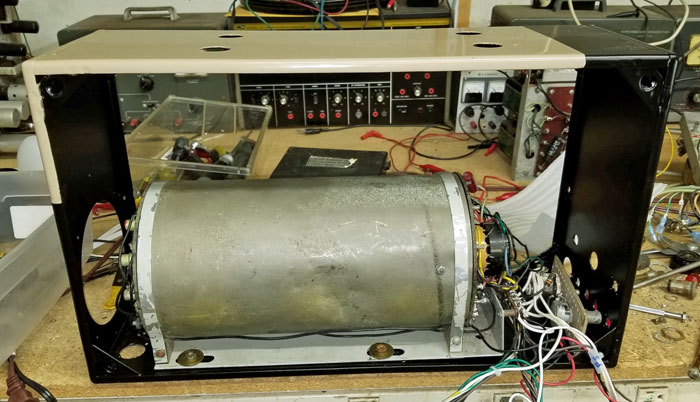
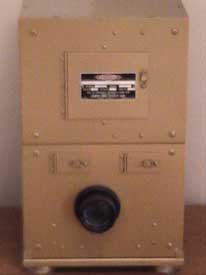
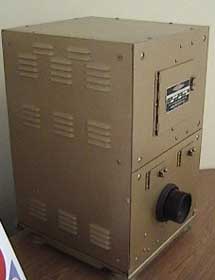
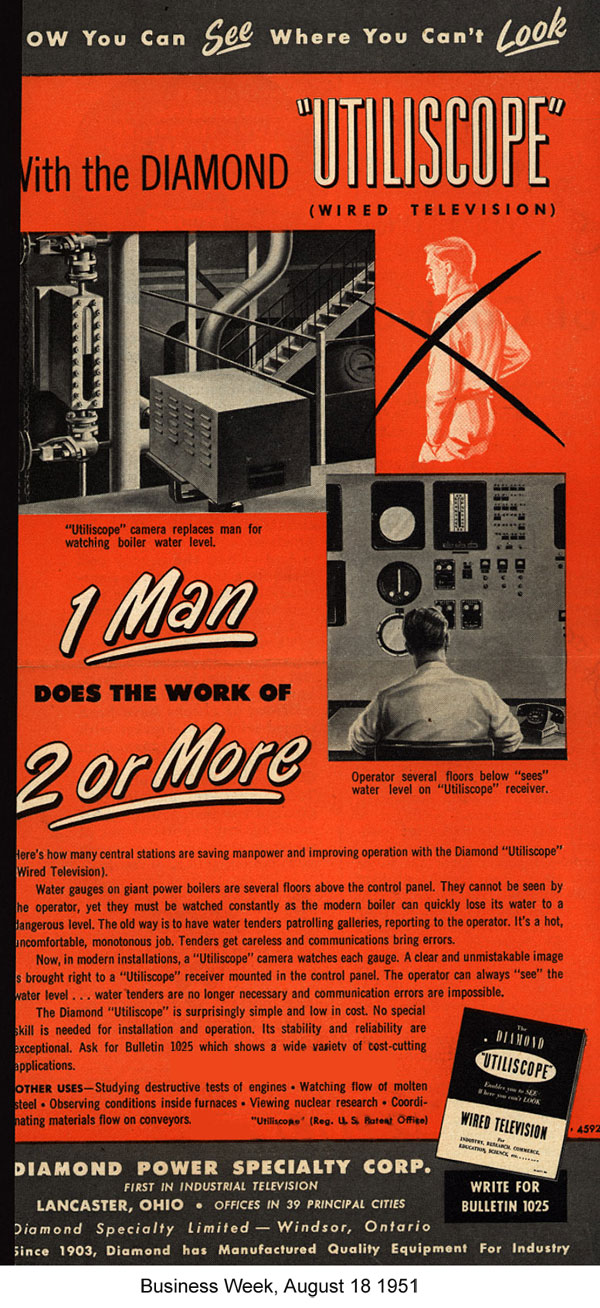
This camera was made in the late 40s or early 50s by the
Diamond Power Specialty Co. of Lancaster, Ohio. It uses an image
dissector tube, and was made to monitor boilers in power plants. The
image dissector had very poor light sensitivity, but it was ideal for high
light levels such as the flames inside a boiler. The image dissector
tube in
this camera was made by Diamond.
The camera has its own count-down sync generator, with
both video and RF output.

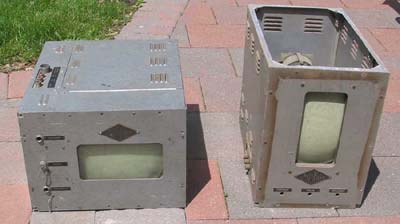
The camera was used with monitors that displayed an
unusual aspect ratio. They may have been made to display the size of the
viewing aperture on the boiler.
The camera and monitors were donated to the museum by Jean
Roundhouse, whose husband Richard was a radio and television engineer in
Lancaster and Columbus.

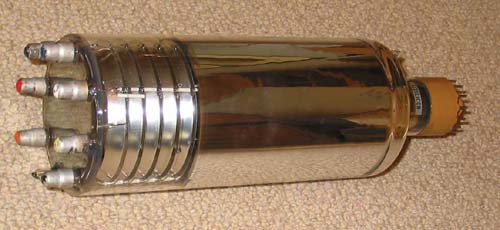
Through the generosity of Tom Genova, we were able to
acquire an original image dissector tube for this camera. It is named
Utilicon, and was made by Diamond Power.
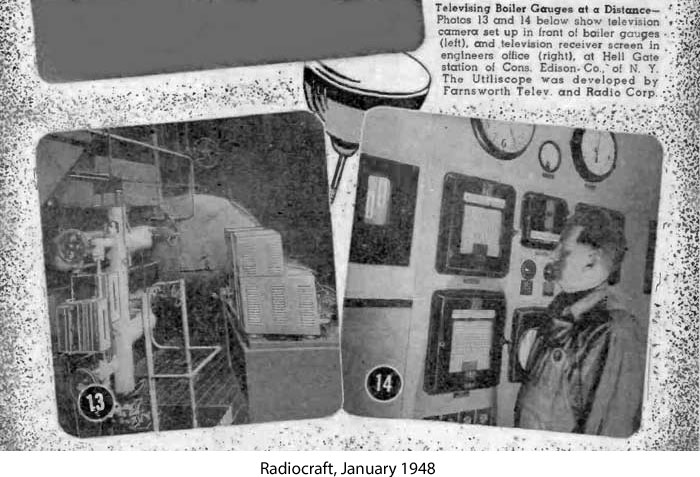
The closed circuit systems sold by Diamond were named Utiliscope. Click
for a
brief
history of Diamond Electronics.
A 1950 article in Popular
Mechanics describes some uses of the Diamond system.
Here is a note from Don Stephenson, a design engineer at
Diamond Power:
This early camera you
have pictured was designed by Diamond and manufactured by Diamond up
through the 60’s. Diamond
started manufacturing the image dissector tube in 1949 or 1950 in our tube lab
here in Lancaster Ohio and continued until about 1973 when Diamond power
sold our section to Arvin Industries. Arvin did not move the
manufacturing of the tube to the new location. We changed the design of
the tube in 49 or 50 to bring the socket out the rear instead of the
side, this made installing it easier. We hold the patent for the rear
socket tube. Also in the mid 50’s we worked on developing vidicons but
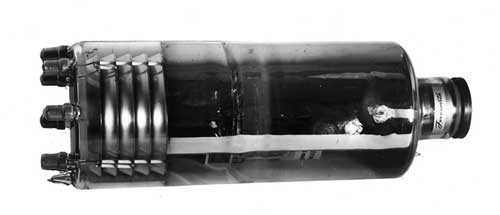
that never came to production. One of our retired managers has, I
believe, two working Farnsworth image dissectors at his home. He may
also have one Diamond made image dissector at home.
The monitor you
have shown was intended to look at a water gauge on the boiler. The
aspect ratio was 4:3 but the whole screen was not needed for looking
at a gauge that was mounted in the up position. The gauge is about 6
inches wide and close to 2 foot tall. The vertical scan really was
rotated by 90 degrees in both camera and monitor so the horizontal was
scanning up and down instead of across as we are familiar with in most
TV systems. The metal plate on the front covered a round picture tube,
if I remember correctly, and the plate was cut to show the part of the
image needed in the control room. Water guage viewing was the first
application for the camera.
We had a
crew of 5 including the department manager that made the tubes. As it is
remembered we could make about 90 tubes a month which is about 3 per
day. When it was decided to close the tube manufacturing in 1973 we had
a rash of orders totaling about 300 so the Utiliscope was still an
active product in our customers hands at that time.
Most of
what we sell today is into the harsh environment as was the Utiliscope.
We have on display
serial number 5 of an early Farnsworth camera that he made for Diamond
around 1946. The image Dissector made by Farnsworth had the connecting
socket coming out the side. I
believe there was an external power supply for the camera.

Courtesy of Duke University Libraries
Ad*Access
|