
Postwar Television Hungarian Sets
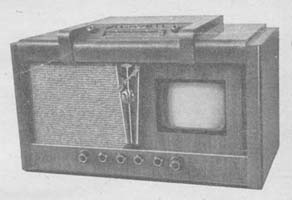
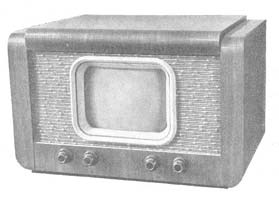
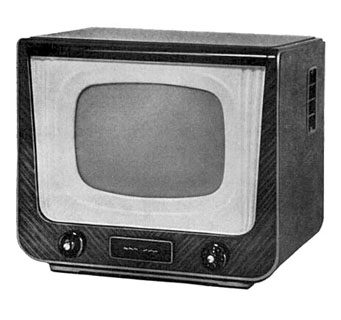
Here are two receivers, brought to Hungary in the early 50s for experimental purposes. The first is the Leningrad T-2, with a design using 26 octal tubes and a built-in radio. It was assembled in the former German Democratic Republic, using Russian parts and documentation. The other was developed in the GDR, the Rembrandt FE 852 D. This set also uses octal tubes except in the tuner. These sets were imported in 1953 or 1954. Thereafter the Central Committee of the Party decided that the Hungarian Orion factory would produce a modern, 43 cm diameter screen television, the AT 501, which was introduced in 1956 right after the Revolution. Pictures and information courtesy of Zolt n Kalm r The following information is from Gabor Andrassy: There were three electronic manufacturers in Hungary in the 1950s:
Orion, Terta, and Vadasztolteny (later renamed Videoton). Terta never
produced any tv sets, but the other two factories made about ten
different models in the late 50s and early 60s with 17" or 21"
rectangular safety-glass type picture tubes, and about twenty models in
the late 60s and early 70s with 25" or 28" tubes. They were all tube
type receivers until the late 60s, when they started using some
transistors (obsolete germanium transistors like AF136, AC125 etc.).
Orion had a patent in late 60s, named the "memory channel selector". It
was a simple two-tube 12 channel selector, but it stored the fine tuning
setting for each channel. The secret was a metal disc on the axle with
12 little screws.
|
||||||